
From Asja’s Studio · Styling Guide
How to Style Live-Edge Wood Art
Natural wood brings warmth to a room. Live-edge art keeps that warmth visible while adding color, geometry and craftsmanship.
Live-edge wood art sits between sculpture and wall décor. The natural outline of the wood is never perfectly uniform, so each piece brings an organic shape into the room before the threadwork is even considered.
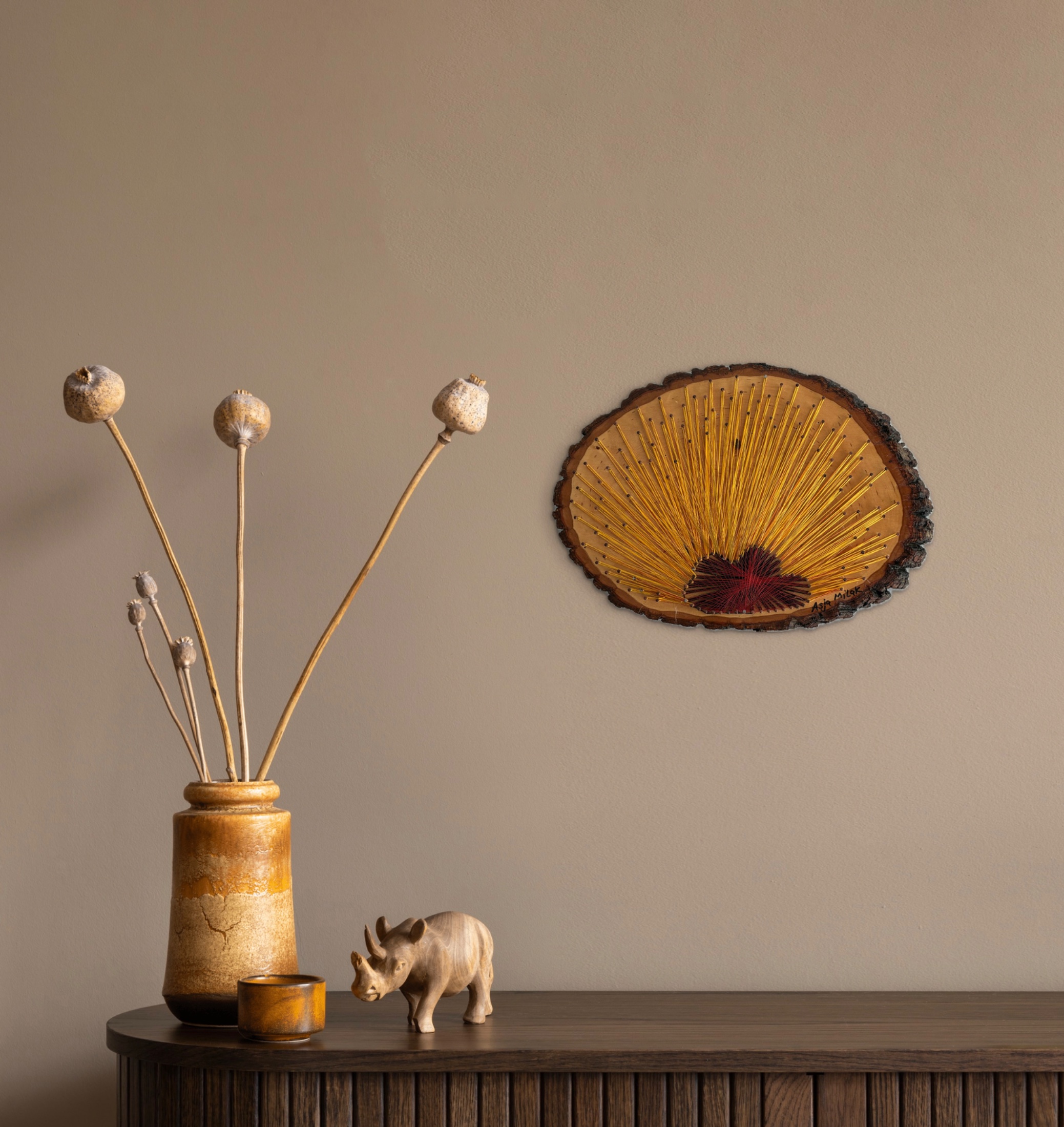
Let the wood be part of the design
Live-edge artwork works best when the natural surface is allowed to remain visible. Instead of treating the wood as a background that disappears, think of the grain, knots, bark edge and silhouette as part of the composition.
That makes live-edge pieces especially useful in rooms that need more warmth or texture. A clean modern space can feel softer with natural wood, while a layered boho interior can use the piece to repeat materials already found in baskets, furniture or woven textiles.
In a modern or minimal room
If your room has simple furniture, neutral walls and clean lines, choose a live-edge piece with a strong central pattern and restrained color palette. Black, gold, cream, blue or metallic thread can create contrast without overwhelming the room.
Give the artwork generous negative space around it. One piece on a quiet wall often feels more intentional than surrounding it with many smaller objects.
In a boho or collected interior
Live-edge art feels at home with layered texture. Pair it with linen, rattan, pottery, vintage wood, plants and soft textiles. The key is to repeat materials rather than match everything exactly.
For example, a blue-and-gold thread design can sit beautifully in a room with warm wood furniture, a blue pillow and a brass lamp. The colors connect, but the room still feels collected over time instead of overly coordinated.
In a rustic or organic-modern space
Organic-modern interiors often combine simple architecture with tactile natural materials. Live-edge string art fits naturally into that balance because the wood is irregular while the thread pattern is controlled and precise.
Look for a piece whose wood tone relates to the room’s flooring or furniture without needing to match it exactly. A little contrast is useful: medium wood can stand out on a pale wall, while lighter wood can soften a dark wall.
Choose the placement by shape
Long horizontal live-edge pieces work well over consoles, benches and low furniture. Round or compact wood slices can hold their own in smaller areas such as an entry, reading corner or between windows. Taller pieces can help fill a narrow wall where a wide artwork would feel cramped.
If you are unsure about size, use the same method described in our wall art sizing guide: mark the approximate dimensions on the wall first and look at them from across the room.
Use color to bridge the art and the room
Because the wood already contributes a warm neutral, thread color can do the rest of the work. Earth tones create a quiet effect. Metallic thread adds light and a more elevated feel. Brighter blues, greens or rainbow tones turn the piece into a focal point.
You do not need every thread color to appear elsewhere in the room. One or two subtle connections are enough to make the artwork feel considered.
Explore natural wood pieces
See the current live-edge wood art collection, including one-of-a-kind pieces that combine natural grain with layered threadwork.
Shop Live-Edge ArtView All ArtworkWhy handmade matters here
With live-edge work, no two bases are identical. Even before the first nail is placed or thread is wrapped, the wood has already determined part of the final shape. That makes the relationship between material and pattern especially visible.
The result is art that feels structured but not manufactured—precise enough to feel intentional, organic enough to retain the character of the material.